Uncategorized

Indie Review – Action Figures – Issue One: Secret Origins

51cxfkvjcyl-_sx331_bo1204203200_ Michael C. Bailey’s Action Figures – Issue One: Secret Origins, is a ridiculously fun superhero novel. It follows Carrie Hauser, a teenage girl who recently gain superpowers, as she deals with her parents divorce, tries to start a superhero team with her friends, deals with veteran superheroes who don’t seem to like her very much, and of course fight supervillains and a shadowy evil organization. I know it sounds very paint-by-the-numbers, but it really isn’t.

This book fixes all the issues I had with Earthman Jack. This guy gets how teenagers talk. It feels real. More impressive to me was just how well he captured the voice of a teenage girl. I legitimately would not have been able to tell it was a man who wrote this. Throughout the story, nearly every character is fleshed out. You really get to know not just Carrie, but her friends, her parents, her friends parents, the other superheroes, etc. They all feel like people, and you can’t help but feel like you have to turn the next page just to get the chance to know them better, which is more than I can say for most books.

While the characterization is flawless, the plot is rather episodic. It mostly ties together in the end though, but rather than seem like a big story, it seems like a lot of smaller ones. Personally, I like this approach, especially to a superhero story which by its nature is episodic. And don’t worry about a cliffhanger ending or anything. There’s a little teaser at the end, but otherwise its basically a complete story.

Something this book does that I found pretty distracting was that it switched from first person to third person mid-chapter. It was confusing at first, but I eventually got used to it, and at least there was a break within the chapter to indicate a different point of view. I understand the decision behind this. The first person narrative makes the reader feel as though they’re in Carrie’s head, and the author didn’t want to lose that. At the same time, there are other things going on that the main character isn’t privy too that is necessary to move the story along. It is a strange, jarring choice, and it wouldn’t have been the one I would’ve made, but at the same time, I understand it. I’d have been much happier though, if it had been done by having a chapter break, with the new form of narration taking place in a new chapter entirely, or use a few different POVs to tell the other parts of the story. In the writer’s defense, however, while it was pretty jarring at first, eventually I got used to the switching between first and third person. I just wish it was handled better.

All in all, despite my issue with the switching between writing styles mid-chapter, this book is by far the best of the indie books I’ve reviewed thus far. The story was fun and engaging, the characters felt real, and the prose itself was very well done. I cannot recommend this book enough. If you like superheroes or even just a good teen drama, check this book out. You won’t regret it.

Using Brand Names and Pop Culture References

There are two different paths folks take in writing. Some folks use stand in brands, such as MyFace, while others will use the actual brand names, such as Facebook. I personally prefer when real names are used. There is a problem with this approach, however. Let’s look the the example I used earlier, but say that instead of Facebook, the writer used MySpace. If you’re reading it today, the book instantly feels dated.

william-haefeli-when-it-s-over-i-ll-explain-all-the-pop-culture-references-you-didn-t-ge-new-yorker-cartoon

I was actually reading a book that came out fairly recently. The book specifically mentioned Radio Shack a few times. Radio Shack closed all its stores in 2015, and thus the book itself becomes something of an oddity. Despite the fact that it is supposed to take place in contemporary times, the book is stuck taking place during or before 2015.

When mentioning brands and technology/websites, it is important to keep it vague. For example, using MyFace may sound fake and stupid, while using Facebook may make it dated once Facebook dies, which it inevitably will (though it looks like it’ll be around for the time being). The compromise would be to call it simply a social media site. That type of site will always be around and will not be outdated. (Then again,  if you think your book has a shelf life of ten years or so with relative certainly that Facebook or Google will still be around then, by all means just go for it.)

reference

You’ve got to be careful using pop culture references. Never use a modern pop culture reference. You don’t know if it’ll stick in the public contentiousness, and it could make your book outdated within a year of its release (please don’t quote Borat). It’s best to stick with older ones that have stood the test of time, like Star Wars or Back to the Future (basically, the 80’s is pretty safe). In the book I mentioned above, with the Radio Shack reference, there’s actually a line that reads “[a]ll four Pirates of the Caribbean movies posters.” Which was accurate when it was written and accurate now. But with a fifth film coming out soon, its about to date the book. So when it comes to referencing a movie series, try to use something that’s been long finished.

Then again, who could’ve ever predicted there’d be more Star Wars? (Basically, unless you’re writing a period piece, you can follow all the rules and still get screwed.)

On Following Your Dreams and Giving Up

Scott McCloud’s ZOT! is one of my favorite comic books. While the book is about a superhero from an alternate dimension, towards the end of its run it becomes another animal entirely. Zot gets trapped in our dimension and all of the sudden the stories seem to almost completely ignore him, and instead just focus on the lives of the people around him. What started off as a sci-fi superhero story became simply a story about normal people and normal life, and the issues they face.

One of the issues, #30 to be exact, is told from the perspective of Barbara Weaver, Zot’s girlfriend’s mom. She’s going through a divorce, and relates the story of how she met her husband, Horton. In the beginning, Horton was a dreamer, he had big plans, lofty dreams, ideals, etc., and that’s part of what she found attractive about him. So they got married. But as time went on, Horton wasn’t doing so well financially. They had bills to pay. A kid on the way. So Horton gives up his dream, and enters the corporate world. Not for himself, but to be able to better provide for his family. To be able to give them a good, comfortable life. Horton grows up.

The funny part is, it’s implied that that’s the reason Barbara doesn’t love him anymore is because Horton is no longer a dreamer. He’s a realist. It implies that poor Horton lost his way. Now, I understand what the author was trying to say with this. He himself was considering giving up his dream at the time, due to his comic not being so successful and having financial difficulties. He wrote this to convince himself that he’d be happier following his dream, even if his family suffers as a result. But if you ask me, Horton is an amazing family man. He gave up his dream for those he loved. He shouldn’t be made out to be the bad guy. He was acting selflessly.

Perhaps I’m wrong though. Maybe I’m just writing this to convince myself that I made the right decision, giving up on my dream. I write, sure, when I can. But at the moment it’s a hobby. When someone goes out and works or goes to school and only writes in their free time, all it is is a hobby (or perhaps a second job, stressing the second part). I would like for it to be my profession, but I can’t very well drop everything and jump all in. Not when I have rent and bills to pay, a wife to take care of and a child on the way.

“When you’re a little kid you’re a bit of everything; Scientist, Philosopher, Artist.
Sometimes it seems like growing up is giving these things up one at a time.”
-The Wonder Years

Giving up dreams is never easy, but its essential, most of the time. We come to realize there are things more important than what we thought we would always want. We come to realize that these new dreams are more important to us than the old one, but letting the old one go is always difficult. And we always look back, wondering ‘what if…’

One of my favorite episodes of The Wonder Years is the one where Kevin goes with his father to work. While there, he asks his dad when he knew he wanted to be a manager at NORCOM. Jack explains that while “Being manager of product support services is a good job, but it’s not what I thought I’d be doing with my life.” He goes on to tell Kevin about how he always wanted to be a captain of a ship. Kevin asks why didn’t he do it, and Jack responds, “How come? Well, you know, one thing leads to another, went off to college, met your mom, next summer I got a job on a loading dock here at NORCOM, the rest is history.” Then Jack says what is probably the most important line, at least to me, that’s ever been said in a television show: “You know, Kevin, you can’t always do every silly thing you want to in life. You have to make your choices. You have to try and be happy with them.”

There’s no shame in giving up a dream. In fact, I’d venture to say there’s honor in it. And I’m sure, somewhere, Horton kept his dream alive. Some part of him hopes that he can quit one day and be the person he was. If only life was that simple.

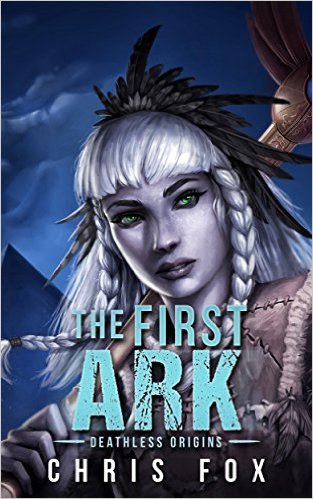
Indie Review – The First Ark

51rmnfzpodl-_sx311_bo1204203200_Ah, how to describe this one? Chris Fox’s The First Ark is an… interesting novella. It’s certainly creative. However, it makes a vital mistake. It isn’t a full story.

It takes place in a time before written history, during an ice age. The main character is Isis, a shaman of an ancient human tribe. It is implied that this is the same Isis as the Egyptian god, and the other characters from the story seem to share the same names as other Egyptian gods. It comes across essentially as an origin story for this pantheon, but with a sci-fi twist. It is, unfortunately, incomplete. I understand that it is a prequel novella, meant to lead into a series a books. But being a prequel novella is no excuse for being incomplete. If you’re offering something as a book, novella, or short story, it shouldn’t feel as though it stopped in the middle. Sure, Meta and Earthman Jack had small teases of what’s to come, but they felt like complete stories. This one did not.

It was well written and interesting. And at the end of the day, it was still good enough for me to ultimately decide to pick up the first book in the series, but only because it was free. If it hadn’t been, I wouldn’t have picked it up. Let this be a note for aspiring writers: writing a short story or novella is a great idea to give folks a taste of what you have to offer, but please leave them satisfied with an ending.

Collaboration

There are many pros to collaboration when it comes to writing, but it is not something everyone can do. Peter David, who is best known for being a comic book writer, said that he found writing prose novels much more fulfilling, as that’s a product that he completes all on his own, as opposed to a comic which is a collaboration with an artist.

Jeph Loeb is another comic book writer (though he’s written other thing as well, and currently heads Marvel’s television decision), and being a comic book writer, his work requires much collaboration. He used to be known as an amazing writer, until his son passed away. His work was never the same again. Some people say it broke him, and he never recovered. I don’t know if that’s true. But something I found interesting about his work, specifically in comics. It became very obvious after a while that he was writing for the artist, often at a disservice to the story. There was no reason for a time traveling Kingdom Come Superman to show up in Superman/Batman: Public Enemies, but the artist wanted to draw him, so he was written in. Batman: Hush, another one of his works, is overly crowded with villains, but most puzzling of all was an appearance by Jason Todd, a former Robin who was dead at the time of it’s publication (don’t worry, he got better. Comic books and all that). It was later revealed that it was Clayface impersonating Jason, but the only reason he was there was because the writer wanted to draw him. And in Loeb’s Supergirl book, he has Supergirl fight the Barbara Gordon version of Batgirl, who was paralyzed at the time and thus no longer Batgirl (don’t worry, she also got better). The only reason that was written was so the artist could draw a character he wanted, even if it didn’t make sense in the concept of the story. (Again, it was revealed to be Clayface in disguise. Boy, Loeb sure relies on that Clayface gimmick a lot.) A successful collaborator should put the story before pleasing his or her partner.

Having two names on a book is good, if only for marketing purposes, as it would lead fans of one individual author to check out the other author’s solo work. But honestly, I don’t know how two people can write a book together, other than switching off chapters or something.  Plotting though, can be done together with another. I enjoy talking through the story with my wife. Its fun, and we get to bounce ideas off each other. In fact, my favorite part of A Spark Ignites was actually her idea (or taking my idea and pushing it one step farther). Using a collaborator can also help you catch plot holes. There are some people who have to do everything by themselves. I used to be one of them. But even if you want to do all the writing yourself, I’ve found that when it comes to working through a story, two heads are better than one.

Book Trailers: Are They a Good Idea?

Speaking to fellow writers out there: Should you make a book trailer? Is it an effective marketing technique? It there a point to them? Numerous books, both self-published and traditionally published try to put out book trailers. It isn’t hard to notice that even book trailers from big publishers often only have views in the quadruple digits on youtube. Often, book trailers are underwhelming, and it is unclear to me if they actually help sales. Ninety-nine percent of book trailers I’ve seen did not make me want to buy the book. Why is that? Well, for one thing, they’re often boring. They’re slow paced, are comprised of static or almost static images, and have a few slow moving words here and there. A book trailer should be like a movie trailer. The point of it is to make the audience HAVE to find out what happens next. When you’re making a book trailer, watch it again and ask yourself, if you say a trailer just like it in the theater, would you want to see the movie? If you’re making a boring trailer, you’re just wasting money that could better be spent on other, more effective forms of advertising (unless you’re skilled enough to make the trailer entirely by yourself).

So the traditionally published books’ trailers are usually boring and not well circulated (this one has been out since 2011 from Harper-Collins, and has 12 views, as of this writing). What about indie books’ trailers? Often they’re boring too, not to mention amateurly done. Many of them contain stock pictures found on google and some text. Then there are those who go a step beyond, and use clips from various movies and tv shows. The problem with that is, ignoring the copyright issues, that they too look cheap and unprofessionally done. Oh, they can be interesting, but then you realize “Hey, it’s a clip from Iron Man! And that one is from Dragon Ball Evolution!” It will make people think of other products, not your work. And again, if it looks like it was made by a fifteen year old making an music video revolving around his favorite show, it is less likely to get a positive response from your audience, and less likely to be taken seriously.

Then there are the few, rare trailers that seem as if they’re advertising a movie. They have actual animation or actors, and it really seems unique. Until the very end, the audience isn’t even aware that it’s advertising a book. And they MUST find out what happens. I wish all trailers were like that, but even among the traditionally published companies who hire professionals, it is quite rare. The trailer for the self-published series, Mindjack, is one of the rare ones that fit this criteria.

Ultimately, unless you’re making something that would make someone need to find out what happens next, something that looks exiting and is professionally made (or close to it), you are likely wasting your time and energy investing in a trailer, and should probably not make one.

A Spark Ignites – Synopsis

I have posted the synopsis to my first novel, A Spark Ignites, on the ‘Books’ page of the website as well as below:

Matt was just a regular teenager, dealing with homework, hormones, high school drama, and an obnoxious older brother. He found his life complicated, but it was nothing he couldn’t handle. Then, when Spark, the city’s greatest superhero unexpectedly dies, Matt finds himself in possession of the hero’s costume and gadgets, with a note asking him to carry on the legacy. Finding himself unable to refuse, he reluctantly begins his superhero career, hoping he can live up to the name of his predecessor. Not knowing the first thing about being a superhero, Matt soon finds himself overwhelmed. Will he find himself in an early grave, just like his hero?

Meanwhile, an aging supervillain, the Inventor, creates a powerful device capable of killing thousands. An elaborate plan is put in motion that could lead to the destruction of everything Matt holds dear. Will he be able to figure out the how to stop him in time? And when evidence arises which indicates that Spark’s death may not be the accident everyone believes it is, Matt finds himself consumed with trying uncover the truth. Will he be able to get to the bottom of this mystery? And if so, will he be able to handle the dark reality behind it?

Matt’s journey is a rollercoaster of action and adventure, although he suspects it will be short lived. And he’s probably right. When you’re the kind of kid who’s never gotten into a fight, how can you be expected to face supervillains and survive? With lives on the line, Matt will have to step up and be the hero Spark knew he could be, whatever the cost.

A Spark Ignites is currently set to come out sometime in March.

Indie Review: Earthman Jack vs. The Ghost Planet

51gv9hmqcjl-_sx331_bo1204203200_Matthew Kadish’s Earthman Jack vs. The Ghost Planet is certainly an ambitious book. For a younger-skewing YA novel, its ridiculously long. Possibly too long, but I’ll get to that later. It follows Jack Finnegan, an average teenager, who stumbles into an interstellar adventure. While I won’t summarize the plot for risk of spoiling it, I will say that it has space battles, alien invasions, a princess to save, and ancient order of knights, Michael Chrichtonesque ‘science,’ pirates, robots, basically everything a young teenager would be into. And the book mixes all these diverse ideas excellently. Every one of the characters, and there are a whole lot of them, has a fully realized personality. The plot, while it has shades of Star Wars and Guardians of the Galaxy, still feels fresh. The narrator is also quite funny, and seems reminiscent of Lemony Snicket at times. Another thing I really liked about it was during a point where Jack loses something important to him, he actually morns, something you usually don’t see in a YA novel (which usually jump right to anger and revenge). It was a nice realistic touch. As a whole, this is a fun YA novel, with a lot going for it.

My biggest issue is probably the dialogue, specifically Jack’s dialogue. At times, it sounds very real and genuine. Other times, it sounds like an older person trying to write what he imagines kids sound like. It can be very unnerving, and took me out of the story more than once. Another thing I found a little annoying is that it seemed just a little too long, purely because of meandering description or pointless dialogue or detours. It could have been a good 10% shorter without losing anything important.

Ending this review on a positive note, this is probably the first book since Harry Potter and the Sorcerer’s Stone where I actually bought the second book before I even finished reading the first. To put it simply, it is just a good, fun, enjoyable book. If you like science fiction or young adult fiction, check it out.


Traditional Publishing vs. Self-Publishing

When I began writing my novel, I had intended to go the traditional route. I was researching query letters, looking up how to get an agent, etc. However, by the time I finished the first draft, I had decided that self-publishing was the best option, for me at least.

Both traditional and self-publishing have pros and cons. One major advantage when it comes to traditional publishing is the advance. You’re paid before your book ever sees print. While that sounds great, from what I understand, most first time authors don’t receive a large advance, and their books rarely earn out. Another advantage of traditional publishing is the editing. Traditional publishers ensure the books they put out are properly edited (although that does not mean that they’re free of errors or poor writing), and as a result those books have a reputation of being of a higher quality. And I would be remiss if I didn’t mention the third, and perhaps most important factor to use traditional publishing. The prestige. That is why most authors become authors. Most imagine what it would be like to be famous, have countless fans, and be part of that ever exclusive club of traditionally published authors.

Now, self-publishing has had a reputation for the longest time of being poorly written and edited, but that simply isn’t true, and the public is starting to realize that.  For every Fifty Shades of Grey (which was originally self-published), there’s a The Martian (also originally self-published). Self-publishing is also cheaper than ever now. Before digital, it would cost  ridicules amount of money that you’d have to pay upfront, and you’d have to try and sell all the books to book stores or fans yourself. These days, you can just upload it to Amazon, and they’ll even let you sell physical print-on-demand copies. You don’t have to put down a dime. Of course, you probably will end up spending some money, such as for your own editor or a cover artist, but it is a negligible expense in the long run most of the time, and you can usually find people who can do it really cheap. Additionally, Amazon pays royalties of 30%-75% depending on the price of your book, compared to traditional publishers where its closer to 8%-15%, in some cases even 5%. And it is also important to remember that in self-publishing, the author owns all rights to the book and can do with it as he or she pleases, while in traditional publishing, the book could be out of print for years, but the author still won’t have the rights to do anything with it.

There’s a common assumption that traditional publishing takes care of all the author’s marketing, so the author can focus on the book. Unfortunately, that simply isn’t true. The traditional publishers have limited resources, and with the very rare exception, first time authors (and even authors who have been published numerous times) will find all themselves doing all of the marketing, with the publisher not lifting a finger. So chances are, a first time author, be it traditional or self-published, will be doing their own marketing. One thing traditional publishers do take care of, however, is the cover. But that also means that the author generally gets no say in what the cover will look like. When someone self-publishes, they can have the cover look however they see fit.

Another factor to consider, which was a major deciding factor for me, was patience (or my lack thereof). I want to be able to hold a book in my hands as soon as possible. If I had gone the traditional route, best case scenario I would be published two years from my personal final draft (before sending out query letters), while with self-publishing, I can be selling the book weeks after the final draft is completed (due to editing, formatting, and the book cover).

What path do you think is better, and which would you choose?

Short Story Review – The Bottle Imp

Robert Louis Stevenson is probably best known for Treasure Island  (which gave us a fantastic Muppet movie) and  Strange Case of Dr Jekyll and Mr Hyde (which was a brilliant mystery that’s marred by the twist ending undoubtedly being spoiled before you read it). However, my favorite work of his is a short story, The Bottle Imp.

The Bottle Imp follows Keawe, a Hawaiian (not an American, as it was written before Hawaii became a state, and was still called the Kingdom of Hawaii), who buys a bottle from an old man, who tells him the bottle can grant any desire. There’s a catch, of course. If the bottle is in someone’s possession when that person dies, then that person’s soul will spend eternity in hell. There are also rules surrounding the bottle, such as how exactly it can be sold (it must be sold at a loss, which means inevitably, someone will be stuck with it) and the way the wishes are granted are reminiscent of the Monkey’s Paw. It is an unholy object, after all.

The story is written almost like a fairy tale, and has  all these great twists and turns. They even tie in historical events and figures. The best way to describe it would be clever. It’s just a fun, clever story. Not to mention it has a fantastic ending, which probably ranks as one of my favorite ending to a short story ever. If you have the time, you really should check this one out.