Continuing from my previous post, I will be looking at my favorite Batman comics, in preparation for Batman 5 Superman.

Batman: Year One
A classic origin tale. Yes, it’s a story you already know (unless you’re my wife, who thought Batman was raised by bats), but it’s still a Batman must-read. There was an animated movie of the same name made, which was a shot-for-shot recreation of the comic.
Batman: The Long Halloween and Dark Victory
Two great mystery stories that are best read together, and pick up on threads from Batman: Year One, as well as including the origin of Two-Face and Robin.
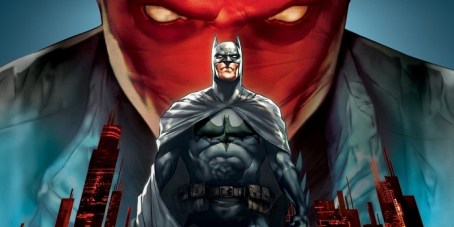
Batman: Under the Red Hood
A great story about the return of an old Batman character though it’s much better to read this after reading Batman: A Death in the Family, as it builds directly off that. There’s also a PG-13 animated movie version that’s arguably better than the comic, and incorporates the relevant parts of Death in the Family.
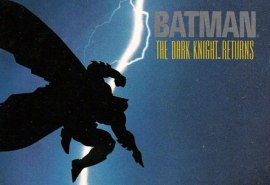
Batman: The Dark Knight Returns
A classic Batman story set in the future with Bruce as an old man. This redefined Batman, making him dark and serous at a time he was associated with campiness. There’s a PG-13 animated movie of the same name that is basically a shot for recreation of the comic, and runs at over two hours long. The Dark Knight Returns and Batman 5 Superman also seem to be based loosely on this comic.
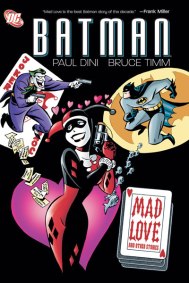
Paul Dini’s Batman
Paul Dini was a writer for the brilliant Batman: The Animated Series. He wrote a number of amazing issues of Detective Comics, with most of the stories being really enjoyable one-and-done stories that can easily be enjoyed by first time readers and fans alike. His short stories are collected in Batman: Detective,Batman: Death and the City, and Batman: Private Casebook. He also wrote the fantastic Batman: Mad Love, Batman: Harley Quinn, and Batman: Harley and Ivy. A number of his stories (although not even close to half) have been adapted into episodes of Batman: The Animated Series, often with the adaptations being just as good, if not better.

Grant Morrison’s Batman
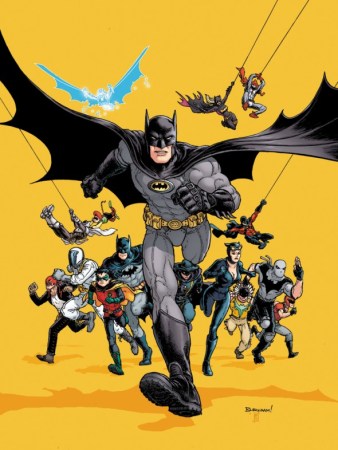
This is the most confusing comic on the list. You’ve got to have intimate knowledge of the DC Universe to enjoy this one, and it’ll require lots of flipping back to earlier stories as his entire 7-year story. It introduces a new Robin, two new Batmen (including one of my favorite), and draws from every era of Batman. The story starts off in ‘Batman and Son’ and continues into ‘Batman: The Black Glove’ (both of which are included together in Batman and Son: New Edition for a significantly cheaper price) Then there’s Batman RIP, the admittedly very confusing Final Crisis, Batman and Robin Volume 1 and Volume 2, Time and the Batman, Batman: The Return of Bruce Wayne, Batman and Robin Volume 3, Batman Inc. volume 1, then another volume 1 (confusing, isn’t it?) and finally volume 2, to finish off the story. Some of this story have been adapted into various animated movies, but they range from awful to merely mediocre. Stick to the comics for this one.
This is far from a completed list, but it’s enough for now. Do you have any favorite Batman or Superman comics?
 Superman: Secret Identity
 Superman: Red Sun
 Superman: Birthright
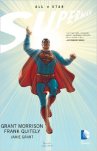 All-Star Superman
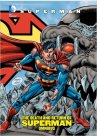 The Death/Funeral/Return of Superman
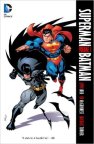 Superman/Batman: Volume 1: Public Enemies & Supergirl
 How do you end a story? Coming up with a good ending is probably the second hardest part of writing (the first is getting started). It’s important to end the story. It doesn’t have to tie up all loose ends, but it has to be satisfying if the reader stopped right there. Now, this is obvious when it comes to a stand alone novel. But what about a book series? A trend I’ve noticed in book series lately (and later series movies, where the last book is split into 2 parts) was to end on a cliffhanger. I understand the reasoning behind it- you want to force the reader to pick up the next one. Personally though, I usually end up feeling cheated. Now, it’s ok to have a slight cliffhanger tacked on at the end (like the reveal of Thanos and the end of the Avengers, or the reveal that Magneto still has his powers at the end of X-Men 3), because the reader still got a satisfying, full story. The lest few seconds can easily be ignored, and is more of a trailer or preview for the next movie/volume. Some cliffhangers though, make you feel as though you’re missing half the story. The second Hobbit movie, for example, has such a sudden and jarring ending, I sat in the theater wondering if the projectionist messed up. I don’t want to be force to buy the next book. If you write a good story, with a good ending, then I’ll buy the follow up. You don’t have to try and trick people into doing.


 When I was seven years old, I created my own comic book character, and began writing and drawing my old comic books. Every year until I was thirteen, through one thing or another, all my comics would get destroyed or go missing. And so, I’d start it all over again every year, promising myself to outdo the years previous. Mind you, I didn’t just try comics. I wrote scripts, animated cartoons, and even programmed video games, all about Spark. By the time I was halfway through high school, I began to wonder if that one lone idea was all I had.
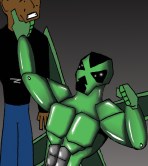 So I stopped. For a couple of months, I didn’t work on Spark at all. I just let my mind wander. I kept a small journal where I’d jot down whatever popped into my head. And by the end of those two months, I’d had ideas for a book, a television show, and another comic book (and not one of them involved superheroes). That’s why every year I’d allow myself a break from whatever it was I was working on, just to think. Sometimes I would revisit the journal and play with those ideas (I’ve taken the old tv series idea and used it to outline six books, which will be my next project after the third book in the Spark series), and other times I’d come up with entirely new ones, like the animated short below:
 They say write what you know. Sounds simple enough. But when writing fiction, you’ll inevitably have to write about things you’ve never experienced. What do you do then?


 Michael Lachman Writes
