Author: MichaelLachmanWrites

Your One Good Idea

001PromoPiece

(Not representative of A Spark Ignites. At all. You can tell this was written by a teenager.)

“Everyone has at least one good story in them.” I don’t remember who it was who said that to me (and no, I’m not talking about the Hitchens quote, who might I add was not actually the first person to use it), but I remember I thought about it a lot in high school. I had been working on a webcomic which would eventually become A Spark Ignites, and I was beginning to worry that Spark was my only idea, my only story. Allow me to explain.

003PromoWhen I was seven years old, I created my own comic book character, and began writing and drawing my old comic books. Every year until I was thirteen, through one thing or another, all my comics would get destroyed or go missing. And so, I’d start it all over again every year, promising myself to outdo the years previous. Mind you, I didn’t just try comics. I wrote scripts, animated cartoons, and even programmed video games, all about Spark. By the time I was halfway through high school, I began to wonder if that one lone idea was all I had.
002PromoPieceSo I stopped. For a couple of months, I didn’t work on Spark at all. I just let my mind wander. I kept a small journal where I’d jot down whatever popped into my head. And by the end of those two months, I’d had ideas for a book, a television show, and another comic book (and not one of them involved superheroes). That’s why every year I’d allow myself a break from whatever it was I was working on, just to think. Sometimes I would revisit the journal and play with those ideas (I’ve taken the old tv series idea and used it to outline six books, which will be my next project after the third book in the Spark series), and other times I’d come up with entirely new ones, like the animated short below:

The trick is to just stop working on what you’re working on. Think about another genre. Something totally out there. Brainstorm. Read. Watch. Listen. Daydream. Just get your head out of you “one good idea.” Focusing on the one thing can be stifling to your creativity. You shouldn’t be afraid to let yourself get out there, out of your comfort zone. You cant worry about failure. Ultimately, while I decided to write my first novel based off what evolved out of what I considered my first good idea, I know it wasn’t my last, and that there will be many more to come.

The thing is, no one is uncreative. Everyone has an original thought. An original story to tell. And who knows, if you just push yourself away from your first idea, maybe you’ll find you have more. You won’t know until you try.
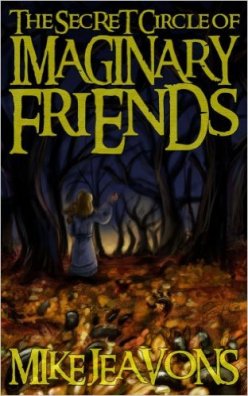
Indie Review: The Secret Circle of Imaginary Friends

51f-rqiw0pl-_sx310_bo1204203200_Mike Jeavons’ The Secret Circle of Imaginary Friends is an interesting children’s book, which I found reminiscent of Goosebumps, with a slight twist of Roald Dahl.

It follows a young boy named Simon, who, after hearing his little sister talking to her imaginary friends, discovers that they aren’t imaginary at all. He joins the ‘secret circle,’ a group of children who know about the imaginary friends, but he soon comes to realize there’s more to the circle than he first thought. Bad things happen to people who try to leave the circle, and the imaginary friends may not be as friendly as they seem.

The book was suitably creepy, with great atmosphere. At the same time, it very much feels like a kids book. It gets dark, but never too dark. Some twists may be predictable, but it’s still done so well that you can’t help but enjoy the ride. The only thing that really bothered me story-wise, was the fact that then ending seemed a little sudden and rushed. I think the book could have used another dozen pages or so, for pacing’s sake.

The writing style, as well as the format and spelling was a little off putting at first, though that could be because it was written in British English. It didn’t take long to get used to though, so I’m not going to take off any points for that.

All in all, this is a fine book to give a pre-teen (or pre-teen at heart) who likes scary stories. It is genuinely creepy, the ending is fun, and it’s fully appropriate for children, without too much blood or realistic violence. If this sounds interesting to you, I highly recommend you check it out.

Free Ebook!

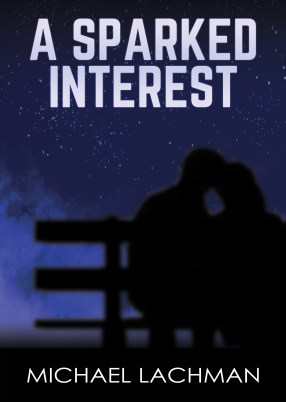
Now when you sign up to my mailing list, you will receive a free ebook of my short story, A Sparked Interest. This is not the free short ebook (Walking the Wire) that will be given away on Amazon and Smashwords when my novel, A Spark Ignites, comes out. It will only be available for free here (elsewhere it will be 99 cents). Unlike the novel, which is a straight up superhero story, this short story is in a totally different genre. I was apprehensive about releasing it (at least the widely distributed free short story will be closer in content to the novel), but it just flowed out of the characters as I was writing them, even though it didn’t fit in the book itself. So it became a short story, which I now give to you. Enjoy!

ASparkedInterestCover6

Description: Dan Raye finally has a date with the girl of his dreams. When the date doesn’t go as Dan planned, he realizes that dreams and reality are two very different things.

Disclaimer: This is a short story that takes place after the events of A Spark Ignites. It is a stand-alone story, however, and it does not require knowledge of A Spark Ignites to be understood or enjoyed. Another thing to note: despite this story taking place within the universe of The Spark Superhero Series, there are no superheroes or mention of superheroes within the story. It is simply the story of a date that doesn’t go entirely as expected.

Religion in Books

Putting religion in a novel is always a tricky thing. Unless you’re specifically writing Christian fiction, it can be easy to turn some people off. That’s probably why most fiction tries to avoid the topic of religion, other than the odd mention of a holiday or whatever. More often then not, especially in fantasy, if religion is mentioned, it’s just a product of the author’s imagination.

713864 (3)

Numerous books use fake religions, such as a Song of Ice and Fire, Forgotten Realms, The Stormlight Archives, etc. Some of the religions are completely alien, while others are thinly veiled copies of actual religions, and are used to deliver commentary. I feel using a fake religion is often best if you want to avoid offending anyone.

Mentioning Christianity is something that should be avoided in most cases. Either you’ll get a lot of eye rolling or angry folks, depending on what your write and who’s reading it. Now, if it is essential to the story  or the character (like Matt Murdock, for instance), then by all means, go ahead, but remember to tread lightly. Most of the Western world is Christian, or at least familiar with Christianity. As such, it’s ok to be vague. It can be easy to say the wrong thing and offend your audience (unless that’s part of the point, like The DaVinci Code). I’m not saying you can’t or shouldn’t make a character religious, I’m just saying you should try to avoid going into detail about it if you can. (Just look at Harry Potter. They celebrate Christmas, but Jesus is never mentioned.)

When it comes to other, less popular religions, such a Islam, Hinduism, or Judaism, you can afford to go more into detail. Chances are, most of your audience isn’t so familiar with it, and will find it interesting without being offended or the like. After all, much like fantasy religions, they don’t have a horse in the race. Friday the Rabbi Slept Late or the new Ms. Marvel aren’t just interesting because they’re good stories that are well written, but also because you feel like you’re exploring a new religion. It gives you a bit more leeway.

Personally, other than the odd throwaway comment, I try to avoid mentioning religion in my writing for very much the same reason I avoid language. The less people you upset, the wider audience you have.

Indie Review: Catalyza – Book 1: Origins

51kcqoxbp1l-_sx331_bo1204203200_Oh, boy. Here we go, I guess.

Tom Wright’s Catalyza – Book 1: Origins is a deeply flawed novella. It just does so much wrong. I don’t even know why the book is called Catalyza. The word isn’t even mentioned once.

The author is obviously obsessed with race. Aisha, the main character, it black. If you forget this, don’t worry, because it’s mentioned or referenced on every page. Every person in the book is described by their skin color. And the character is obsessed with going to a black church (and won’t go to a white church), making black friends, joining black social clubs (and won’t join clubs that are ‘too white’), sitting next to black students in class, not going to white parties, and avoiding white policemen because they’re all racist. Oh, and this was written by a white guy (which actually makes sense. I can’t imagine a black person is that obsessed with race. I mean, I’m Jewish. Very Jewish. I stand out in a crowd. I wear a yarmulke in public, and have gotten my share antisemitic remarks as a result. Yet I don’t go around thinking ‘Jew,Jew,Jew, oh, are they Jewish? oh, a Christian group, I’ll avoid them. Jew,Jew,Jew.’ I’m a person, plain and simple. And I’m sure African Americans or Muslims feel the same way). This book seems obsessed with race in only the way that someone who isn’t part of that of that group can be.

But I could be forgiving of that little quirk if everything else was good. It’s not. There’s also so much minutia here. Conversations and scenes that go nowhere. Its frustrating. I don’t want to read four paragraphs of how many movies you watched before bed, or a page of exchanging pleasantries with people over the phone!

As for the plot, it follows a girl, Aisha, through her first few days in college. She goes to church, gets involved in a protest, gets superpowers, saves someone from an accident she caused, and goes to a party when she and her friend almost gets date raped (at which point she endangers their lives and plants false evidence to frame them when calling the police doesn’t work. Naturally the potential date rapists are white guys, who she was initially distrustful of because they were white). That’s the whole story, basically. It ends with a teaser that our hero still plans on taking down a corrupt police officer. <sarcasm>Because having the power to essentially control time means that such a task will be a huge challenge.</sarcasm> Also worth mentioning, during the story, she reveals her powers, which she just discovered hours before, to her professor whom she barely knows (she only met once, the day prior). Not the brightest of people, I suppose.

tumblr_nm7npvvxof1u496xso1_500

A couple of panels from Milestone’s Icon

I’m not saying this story doesn’t deal with important issues. It just deals it poorly. There are much better ways to go about it, where you don’t cause your audience to eyeroll or feel like they’re being preached to. Look at one of my favorite comic books, Icon, for example. It deals with race, tensions between African Americans and cops, even abortion, and its all done in a non-hamfisted way. It makes the reader think about the issues without making them realize it, while feeling just like an average (or really good) superhero comic. This story feels like the reader is being hit over the head with a mallet of the author’s personal propaganda.

So yes, this was a bad book. The worst one I’ve reviewed thus far. In a way though, I’m morbidly curious about the next book in the series. Like watching a plane crash, it may be horrible, but I just can’t look away.

I’m obviously not going to be posting this review to Amazon or Goodreads, as I don’t believe there’s a reason to ever post any review two stars or less on an indie book (unless it’s purposefully offensive or meant to rip people off). But it crossed my mind.

Using Short Stories

So you want to offer a free sample of your work in hopes people like it and buy the stuff you’re actually selling. Sounds good. A popular marketing technique is offering the first book in a series for free, and charging for the second one. That’s all well and good if you have two or more books in your series, but what happens if, for the moment, you only have one? You don’t want to offer it for free, because then you’re essentially wasting your time, as there’s no other product for sale to lead people to (yet). The solution is to write a self-contained short story that ties into to book you’re selling, and offer that for free. Hopefully, folk will download the short story, enjoy it, and buy your full-length novel as a result.

short-story

In the digital age, anyone can self-publish a short story!

The short story should be between 5,000-15,000 words. Anything further is pushing it into the realm of a novella. You should want to get started on your second book, so limit the time you spend on the short story. Remember, it’s a marketing tool, used to sell your novel. It isn’t, in and of itself, a product you’re selling. The advantage of a short story is that it doesn’t require much of a commitment from you or the reader. I wrote a 5,000 word short story in under a week (which I intend to release simultaneously with my novel). They’re also easy and cheap to edit, and because they can be done quickly, from start to finish, you can publish it mere weeks after (or even at the same time) you publish your full-length novel.

cheerupemokid-comics-exercise-1033304

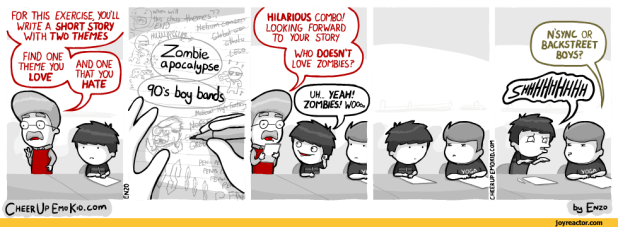
The story should be about a side character, preferably (you’ll want to save the main character for the main series, although he or she can make a cameo), or a prequel, and you should take pains to ensure that nothing that important happens in it. It should be a side story, a nice little adventure that isn’t necessary to read if you’re reading the novels, nor do they even need to be referenced. Not everyone will read the short story, and if it isn’t numbered, it probably won’t show up on your Amazon series page, so it is important to make sure there isn’t major character development that would effect later books. But just because you’re limited doesn’t mean you can’t tell a good story that’s short, sweet, and to the point, makes your audience that to find out more about your character(s) and most importantly, has a satisfying ending.

That last bit is vital. You do not want to have the story end on a cliffhanger. It will just frustrate the reader. They’ll feel scammed. You want your reader to leave the book with a good taste in their mouth. And if you’re lucky, they’ll hunger for more before long. One final thing, make sure to link to the novel you’re trying to sell at the end of the short story. It’s no good having a reader like your work if they can’t find it.

Indie Review: Indomitable

51-wlfbaxkl-_sx384_bo1204203200_J.B. Garner’s Indomitable – The Push Chronicles: Book 1, is a superhero story unlike any superhero story I’ve ever read before. That’s because it just doesn’t feel like a superhero story. It feels closer to sci-fi if anything.

Indomitable follows Irene Roman, a scientist who witnesses the birth of a new reality: A world of superheroes. She takes it upon herself to try an return reality back to the way it was. Saying anything more would spoil the book, I think, but it seems heavily inspired by my favorite issue of Neil Gaiman’s Sandman (issue #18, I think), A Dream of a Thousand Cats.

The novel plays with a lot of classic comic book tropes, such as monologue, with the main character being the only one aware of whats going on. It was very cleverly done, especially having the POV character being aware of the reality and tropes, but because she’s not a huge comic book fan (she doesn’t even like the things), she avoids coming across as smug.

Something I found interesting was that there is no true villain, which is quite a rarity for a story like this. Oh, sure, there are characters who are jerks or mentally ill, but no one comes across as evil. Sure, there’s mention of an evil mastermind pulling strings from behind the scenes, but he has almost no presence in the story and seems like almost an afterthought, although I’m sure he shows up in the sequel. Speaking of the sequel, one thing that felt a little off putting about the book seemed to be the build up to a specific ending without the payoff. I have a feeling that was intentional though, given the last line. The ending subverted the expectations of a superhero origin story, which is something I really enjoyed.

I did find it annoying, however, that the author commonly employed words that, to me at least, came across a little too pretentious,  like he was trying to show off or enjoyed abusing the thesaurus, usually using ten dollar words when a fifty cent word would’ve done the job. He also often chose awkward sounding choices when it came to the phrasing of his sentences (although they were grammatically correct). I do know that the author just recently come out with a new edition of the novel wherein it was reedited, so its possible those issues are now fixed.

All in all, it certainly wasn’t what I expected, but I’m glad I read it. If you’re a fan of sci-fi or superheroes, give it a read. It’s a superhero book for folks that aren’t necessarily big on superhero stories. It isn’t what it appears at first glance, but that’s not a bad thing.

Writing What You Don’t Know

write-what-you-knowThey say write what you know. Sounds simple enough. But when writing fiction, you’ll inevitably have to write about things you’ve never experienced. What do you do then?

You can always do research, and read about other people’s personal experiences. It can be helpful, but often it can come across as just spitting back something you heard or read, not something you experienced, and sometimes the reader will be able to tell that the feeling behind it is hollow.

Your own personal experiences are the best wells to draw from. Just because you didn’t experience something exactly doesn’t mean that you can’t approximate your experiences and adapt them to suit the story. For example, I did not go to a public high school. I went to a private religious boys-only school. As such, I never experienced a high school romance. In fact, teenage dating is alien to me. However, my high school experience was not without drama, and my college experience was not without dating. By drawing from my high school and college experiences, I was able to write scenes taking place in a public school that felt grounded and real, even if I did not have those exact experiences myself.

calvin-and-hobbes-write-what-you-know

When it comes the the more fantastical elements to a story, one can still draw from personal experiences. It just requires a little exaggeration. I may not know what it’s like to turn into a seven-foot-tall green rage-monster, but I know what it’s like to be angry. I know what it feels like to have that power and adrenaline coursing through me, and how easy it can be to lose oneself to the blinding rage, doing as one pleases without thought of consequence. I don’t know what it feels like to fly, but I know the feeling of exhilaration when the roller coaster drops, leaving my stomach behind as the ground rushes by me, my face fighting against the wind. Just take what you experienced and exaggerate it, and it will read better than simply imagining it and writing that down.

Whenever able, write what you know, even if you don’t know it.

They Stole My Idea!

You’re sitting there, reading a book or watching a movie or TV show, when something happens that is eerily similar to something you’d thought of ages ago, perhaps even written down. So naturally you exclaim, “Hey, they stole my idea!”

movies-that-actually-have-the-same-plot-012-550x440

Not exactly what I’m talking about.

I must’ve heard this line dozens of times. Heck, I’ve used it myself one more than one occasion. The truth is, of course, that nothing is original. As King Solomon said, “There is nothing new under the sun.” Chances are, no one stole your idea. You and whoever wrote the other work were likely influenced by the same thing, and as a result came up with a similar concept. The question then is what do you do next?

There’s an aspect of the story in my book, A Spark Ignites, which was done to similar effect in a film that came out last year. When I saw it, I was quite disheartened, especially as I had written the outline that included that very plot point well over half a decade prior. What I ended up doing was keeping the plot point, but downplayed it. It no longer played as big of a roll as it did before, and I figure by the time people read it, enough time will have passed, and the story is different enough, that no one will notice the similarities. That isn’t the only option though.

c2572c356653b9703059d5b1ccb0faa9-600x

It isn’t unusual for two movies with the same plot to come out around the same time, such as Olympus Has Fallen and White House Down, Deep Impact and Armageddon, or Madagascar and The Wild. But why is it that only one of those movies are remembered, while the other is often forgotten? And notice that it isn’t always the movie that comes out first that’s remembered. What will stick in people’s mind is what was executed better. So just because someone ‘stole’ your idea is no reason to throw it out. Come out with it anyway. Just make sure you do it better.

Making a Difference: The Reason We Write

I used to enjoy Taylor Swift. I loved how Norman Rockwellesque her early music felt. The innocence. It brought forth images of a simpler life in a small town, where every love is your first love, true love, where every kiss is your first, where life was ideal, simple, beautiful. Perfect. Of course, life is not like that, I know. It never was. Not for us, not for our parents, and not for Taylor Swift. But still, I liked it anyway. Call it nostalgia for a time that never existed. There’s a song though, from her relatively more recent years, that is probably my favorite of hers.*

“All Too Well” by Taylor Swift

There’s a reason why this is probably my favorite Taylor Swift song. Its because it touches a primal desire. Throughout our life, all of us meet people only to fade out of their life after a time, and its nice to imagine you had some sort of impact, that they haven’t forgotten you, that it wasn’t all for nothing.

Its nice to imagine you mattered.

“My name is Ozymandias, king of kings:
Look on my works, ye Mighty, and despair!”
-Shelley’s “Ozymandias”

The reason we write, the reason we become writers, is very much the same reason we have children. We do it to leave something behind. Not fame or fortune. Rather, a legacy. When all is said and done, when we’re lying there on our deathbed, we want to know we made a difference. We want to be remembered. Because as long as we leave something behind, we can rest knowing that in some way, however small, we mattered.

Our legacy is our immortality.


*I should note that her recent single, Wildest Dreams, deals with similar subject matter, but does it in a more shallow way, not to mention the music video, although gorgeously shot, seems to be advocating adultery, which is as unNorman Rockwellesque as you can get.